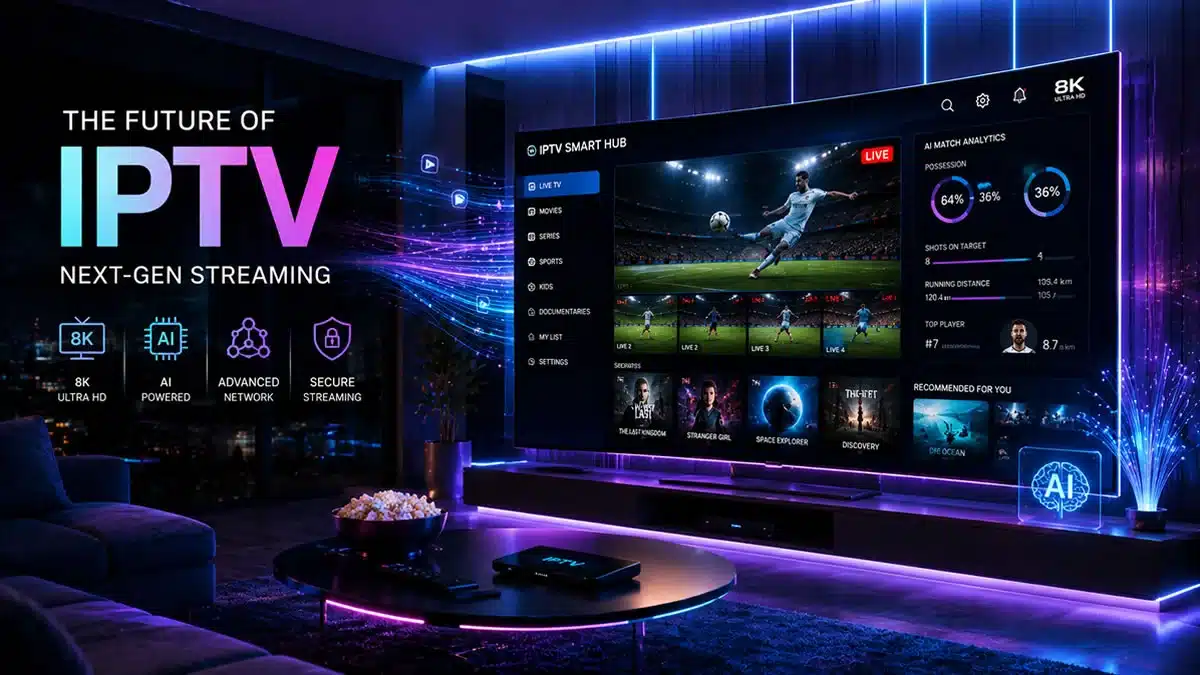
The global entertainment market is undergoing an unprecedented shift as traditional satellite feeds and high-cost cable bundles yield ground to broadband-delivered media. Internet Protocol Television (IPTV) has matured from a simple alternative into a dominant force driving modern television infrastructure. Powered by cloud computing, dynamic video codecs, and artificial intelligence, the IPTV landscape is expanding rapidly across North America, Europe, and Asia-Pacific markets.
Understanding emerging IPTV trends provides critical insights into where live broadcasting, digital rights management, and user experiences are headed. This technical breakdown analyzes the top trends shaping the future of IPTV streaming and what viewers can expect from next-generation TV services.
Technical Overview: The Evolution of IPTV Architecture
The underlying technology supporting live IPTV delivery has advanced beyond basic unicast server connections. Modern providers rely on cloud-native Content Delivery Networks (CDNs), serverless edge computing, and real-time data processing to scale streams to millions of concurrent viewers without degradation.
When an end user requests a live broadcast, modern edge servers use Low-Latency HLS (LL-HLS) or WebRTC protocols to reduce broadcast delay from 30+ seconds down to under 3 seconds. Concurrently, machine learning algorithms dynamically adjust the video bitrate based on real-time network stability, ensuring seamless playback across diverse devices.
1. Widespread Adoption of AV1 and HEVC (H.265) Codecs
As consumption of 4K, HDR10+, and Dolby Vision content increases, bandwidth conservation has become a priority for both streaming providers and Internet Service Providers (ISPs).
The adoption of the open-source AV1 video codec represents a major technological leap:
- Higher Compression Ratios: AV1 delivers crisp 4K live streams using up to 30% less bandwidth than HEVC (H.265) and 50% less than legacy H.264 standards.
- Reduced ISP Throttling: Lower overall data consumption prevents home networks from hitting bandwidth caps set by ISPs during peak viewing hours.
- Hardware Acceleration: Modern smart TVs, streaming media sticks (such as the Amazon Fire TV Stick 4K Max), and dedicated GPUs now include hardware AV1 decoders, preventing CPU overheating and system lag.
2. Ultra-Low Latency (ULL) Live Sports Streaming
Historically, one major downside of streaming live television over the internet was broadcast delay. Streaming feeds often lagged 30 to 60 seconds behind traditional satellite or over-the-air (OTA) signals, spoiling live sports moments through phone notifications or neighbor cheers.
The Low-Latency Tech Stack
- Low-Latency HLS (LL-HLS): Decreases delivery chunk sizes into tiny sub-second media fragments, dropping playback delay to 2–5 seconds.
- WebRTC Integration: Enables sub-second interactive live broadcasting, ideal for live sports betting, fan engagement polls, and real-time statistics overlays.
- P2P-CDN Mesh Networks: Offloads bandwidth strain from central origin servers by allowing client devices on the same ISP node to share encrypted stream fragments safely.
3. AI-Powered Personalization and Interactive EPGs
Electronic Program Guides (EPGs) are evolving beyond simple grid-based program schedules. Artificial intelligence is changing how users discover and interact with live television content.
Key AI Features Reshaping IPTV Applications
| AI Capability | Technical Functionality | Viewer Benefit |
| Predictive Channel Mapping | Analyzes viewing habits to preload preferred channels in background RAM | Instantaneous channel switching (Zero Zapping Delay) |
| Real-Time Translation | Generates dynamic multi-language sub-titles on the fly using NLP models | Instant accessibility for international broadcasts |
| Automated VOD Tagging | Uses computer vision to index scenes, actors, and highlights in real time | Ability to jump directly to sports highlights or key movie scenes |
4. Multi-Screen and Cloud DVR Native Features
Viewers increasingly demand flexibility in how and where they consume content. Modern IPTV platforms are embedding cloud infrastructure to support advanced media workflows without taxing consumer hardware storage.
- Multi-View Capabilities: Advanced IPTV client applications (such as TiviMate and IBO Player) now support rendering up to 4 live streams simultaneously on a single screen—a crucial feature for sports fans monitoring multiple games.
- Server-Side Cloud DVR (cDVR): Rather than saving large video files locally onto device flash memory, recordings are processed directly on cloud servers and streamed on demand across mobile, desktop, and Smart TV screens.
5. Stricter Security, Watermarking, and Anti-Piracy Ecosystems
As IPTV adoption increases, broadcasting authorities and rights holders are deploying stricter compliance measures to protect copyright distribution:
- Dynamic Forensic Watermarking: Invisible, unique identification tokens are embedded directly into individual user video streams. This allows distributors to identify and shut down unauthorized re-broadcast sources instantly.
- Automated DMCA Enforcement: AI bots continuously crawl network nodes to flag and block unauthorized streams, encouraging viewers to utilize reliable, verified providers.
- Strict Endpoint Encryption: Modern services rely on TLS 1.3 and token-based API authentication (via Xtream Codes frameworks) to prevent unauthorized stream hijacking.
Related Setup Guides and Internal Resources
To learn how to deploy and configure modern IPTV client applications across various platforms, consult our detailed step-by-step installation guides:
- Configure desktop software with our How to Install IPTV on Windows PC Guide.
- Install applications on LG devices using our IPTV Setup on LG Smart TV Tutorial.
- Set up Tizen OS platforms via our How to Set Up IPTV on Samsung Smart TV Guide.
- Configure Android TV platforms using our How to Install IPTV on Android TV Guide.
Frequently Asked Questions
What is the most important IPTV technical trend for live sports?
Ultra-Low Latency HLS (LL-HLS) is the most critical technical advance for live sports streaming. It reduces stream delivery lag down to 2–4 seconds, putting internet streams on par with traditional cable and satellite broadcasts.
Why is AV1 codec support important for future IPTV streaming?
The AV1 codec provides up to 30% better data compression than HEVC (H.265). This allows users to stream high-bitrate 4K content on lower internet speeds without encountering buffering or bandwidth throttling.
Will IPTV completely replace traditional cable TV?
Industry adoption data indicates that traditional cable subscriptions continue to decline globally as viewers transition to broadband-delivered IPTV solutions for lower costs, higher channel counts, and multi-device support.
Summary
The evolution of IPTV technology is transforming home entertainment through advanced compression codecs, low-latency distribution networks, and AI-driven personalization. Staying informed about these IPTV trends ensures users can select compatible hardware and client software capable of supporting next-generation 4K streaming performance.