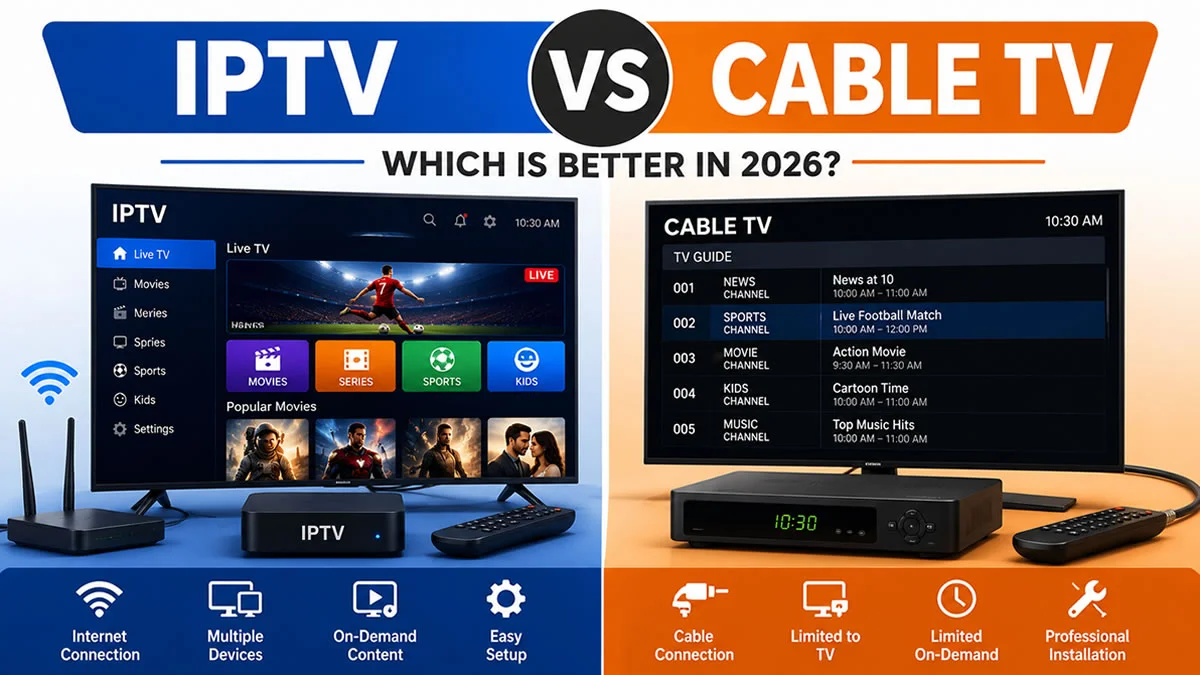
IPTV vs Cable TV compares internet-based streaming with traditional cable broadcasting. IPTV offers flexible viewing, multi-device access, and on-demand content, while cable TV provides a stable, traditional viewing experience without internet dependency.
Television has changed significantly over the past decade. Many households are moving away from traditional cable TV in favor of internet-based streaming solutions. As broadband speeds continue to improve, viewers now expect greater flexibility, better picture quality, and the ability to watch content on multiple devices.
Both IPTV and cable TV deliver television programming, but they use different technologies and offer different viewing experiences. Understanding these differences can help you decide which option better suits your entertainment needs.
What Is IPTV?
IPTV (Internet Protocol Television) delivers television content over an internet connection instead of using traditional cable or satellite infrastructure. Viewers can watch live TV, on-demand movies, TV series, and other digital content through compatible streaming applications and devices.
Because IPTV relies on broadband internet, users can enjoy entertainment from multiple locations and across a variety of supported devices.
What Is Cable TV?
Cable TV delivers television programming through a physical cable network connected to your home. Channels are transmitted by cable providers and are usually accessed through a cable box or built-in TV tuner.
Cable television has been a popular choice for decades, especially for live news, sports, and local programming.
IPTV vs Cable TV: Side-by-Side Comparison
| Feature | IPTV | Cable TV |
| Delivery Method | Internet connection | Cable network |
| Installation | Simple software setup | Physical cable installation |
| Device Support | Multiple compatible devices | Mainly television |
| On-Demand Content | Commonly available | Limited availability |
| Streaming Flexibility | Watch from different locations | Mostly home-based |
| Software Updates | Frequent | Limited |
| Picture Quality | HD, Full HD, and 4K (where supported) | Depends on provider |
| Internet Required | Yes | No for traditional cable |
IPTV vs Cable: Flexibility and Convenience
One of IPTV’s biggest advantages is flexibility. Instead of being limited to a single television, compatible services can often be accessed from Smart TVs, streaming devices, smartphones, tablets, laptops, and desktop computers.
Cable TV generally focuses on home viewing through dedicated hardware, making it less flexible for users who frequently travel or prefer watching content on multiple devices.
IPTV vs Cable TV Picture Quality Comparison
Modern internet connections make high-definition streaming widely accessible.
Many IPTV platforms support:
- HD
- Full HD (1080p)
- 4K Ultra HD
- 8K Ultra HD (where available)
Cable TV quality varies depending on the provider, infrastructure, and channel availability.
Device Compatibility
IPTV works with many popular devices, including:
- Smart TVs
- Android TV
- Google TV
- Amazon Fire TV devices
- Apple TV
- Android phones
- iPhone and iPad
- Windows PCs
- Mac computers
- Tablets
Cable television typically requires a television connected to a cable box or provider-approved equipment.
Installation Process
IPTV setup guide for all devices is generally straightforward. After receiving access details from a provider, users typically install a compatible application and sign in.
Cable TV usually requires a technician visit or physical installation, depending on the provider and location.
Internet Requirements
Unlike cable TV, IPTV depends on a reliable broadband connection.
Recommended speeds include:
- SD Streaming: 5 Mbps
- HD Streaming: 10–15 Mbps
- Full HD: 20 Mbps
- 4K Streaming: 25–50 Mbps
A stable network helps provide smoother playback and better viewing quality.
Which Option Is Better?
The right choice depends on your viewing habits.
IPTV may be suitable for users who value:
- Multi-device access
- Flexible viewing
- Internet-based streaming
- On-demand content
- Modern streaming features
Cable TV may still appeal to users who prefer a traditional television setup and do not want to rely on an internet connection for viewing.
Tips Before Choosing a Television Service
Before selecting any television provider, consider:
- Your internet speed
- Device compatibility
- Available content
- Customer support
- Subscription terms
- Local availability
- Legal licensing in your region
Choosing the best IPTV provider that operates lawfully and offers reliable service can help ensure a better viewing experience.
Frequently Asked Questions
Is IPTV replacing cable TV?
Many viewers are choosing internet-based television because of its flexibility and multi-device support, although cable TV continues to serve many households.
Does IPTV require the internet?
Yes. IPTV delivers television content through an internet connection.
Can I use IPTV on a Smart TV?
Many Smart TVs support IPTV-compatible applications, although compatibility depends on the device and operating system.
Which offers more flexibility?
IPTV generally provides greater flexibility because it can be accessed on multiple compatible devices rather than being limited to a traditional television setup.
Is cable TV still worth it?
Cable TV remains a suitable option for users who prefer conventional television service and do not want to depend on internet connectivity.
Which offers better picture quality?
Both technologies can provide excellent picture quality. Actual performance depends on the provider, available infrastructure, and internet speed in the case of IPTV.
Final Thoughts
Both IPTV and cable TV have their strengths. IPTV offers greater flexibility, broad device compatibility, and internet-based streaming, while cable TV provides a familiar viewing experience through traditional infrastructure.
The best option depends on your internet connection, viewing preferences, preferred devices, and the services available where you live. Before subscribing to any television service, compare features, support, pricing, and licensing information to make an informed decision.